


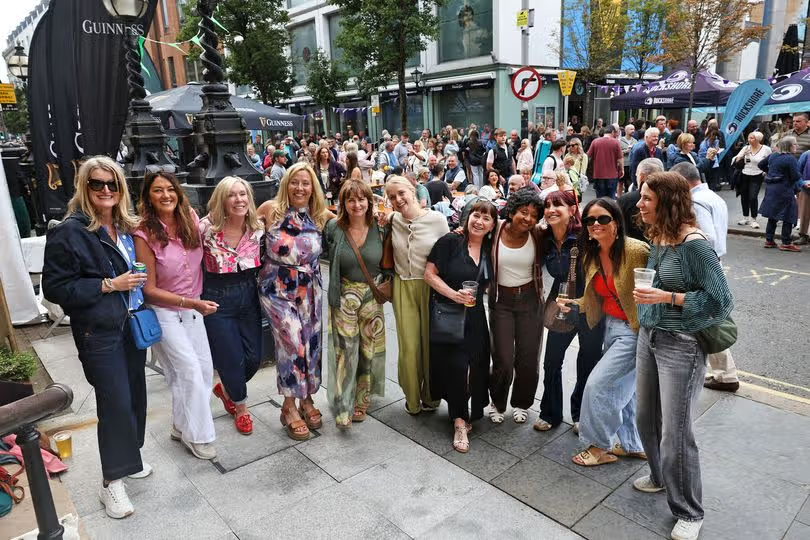
Reared Protestant and unionist, the Fleadh in Belfast has many layers for me… It’s a revelation that shows we can be brought together – ALF MCCREARY

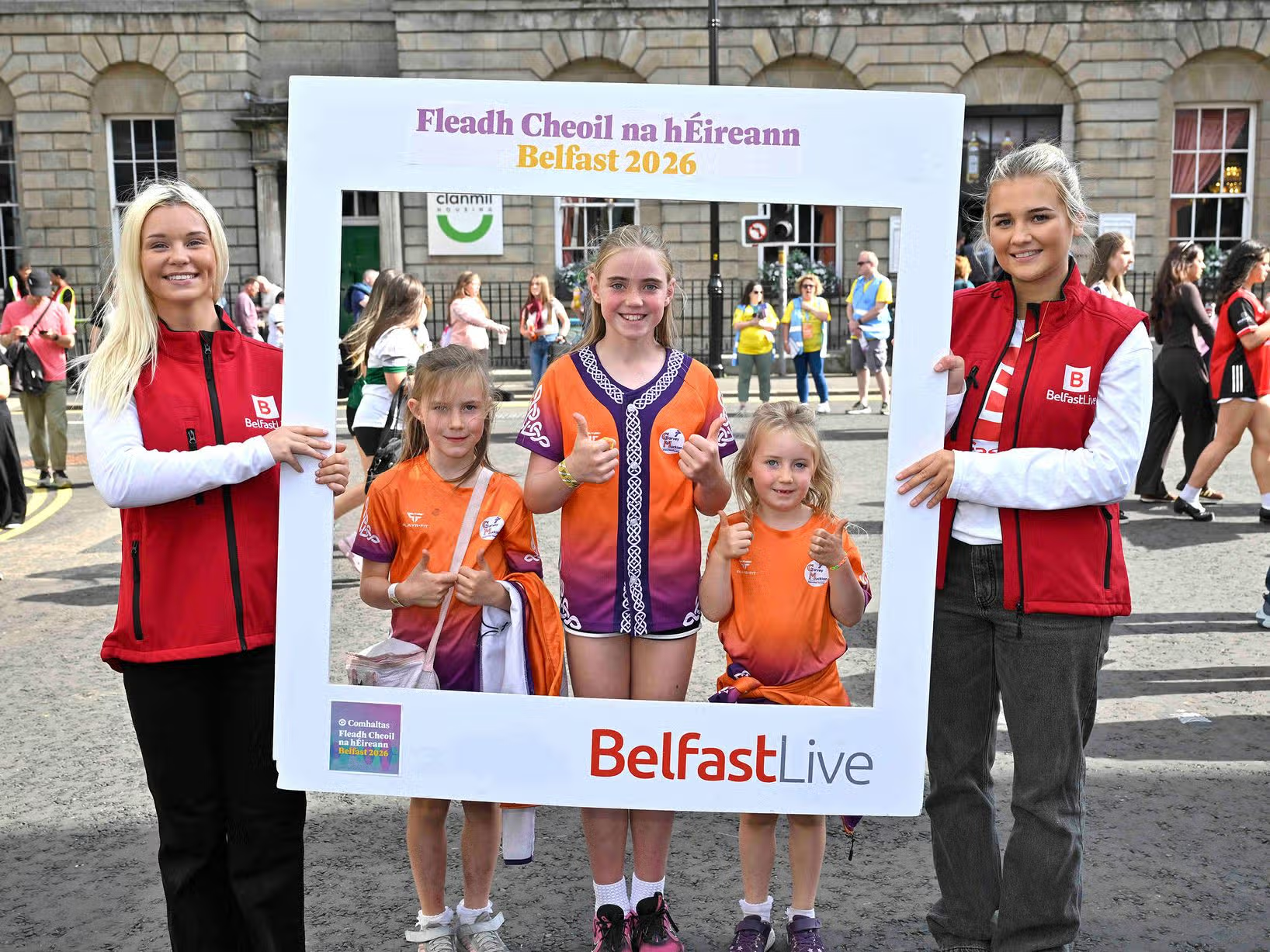

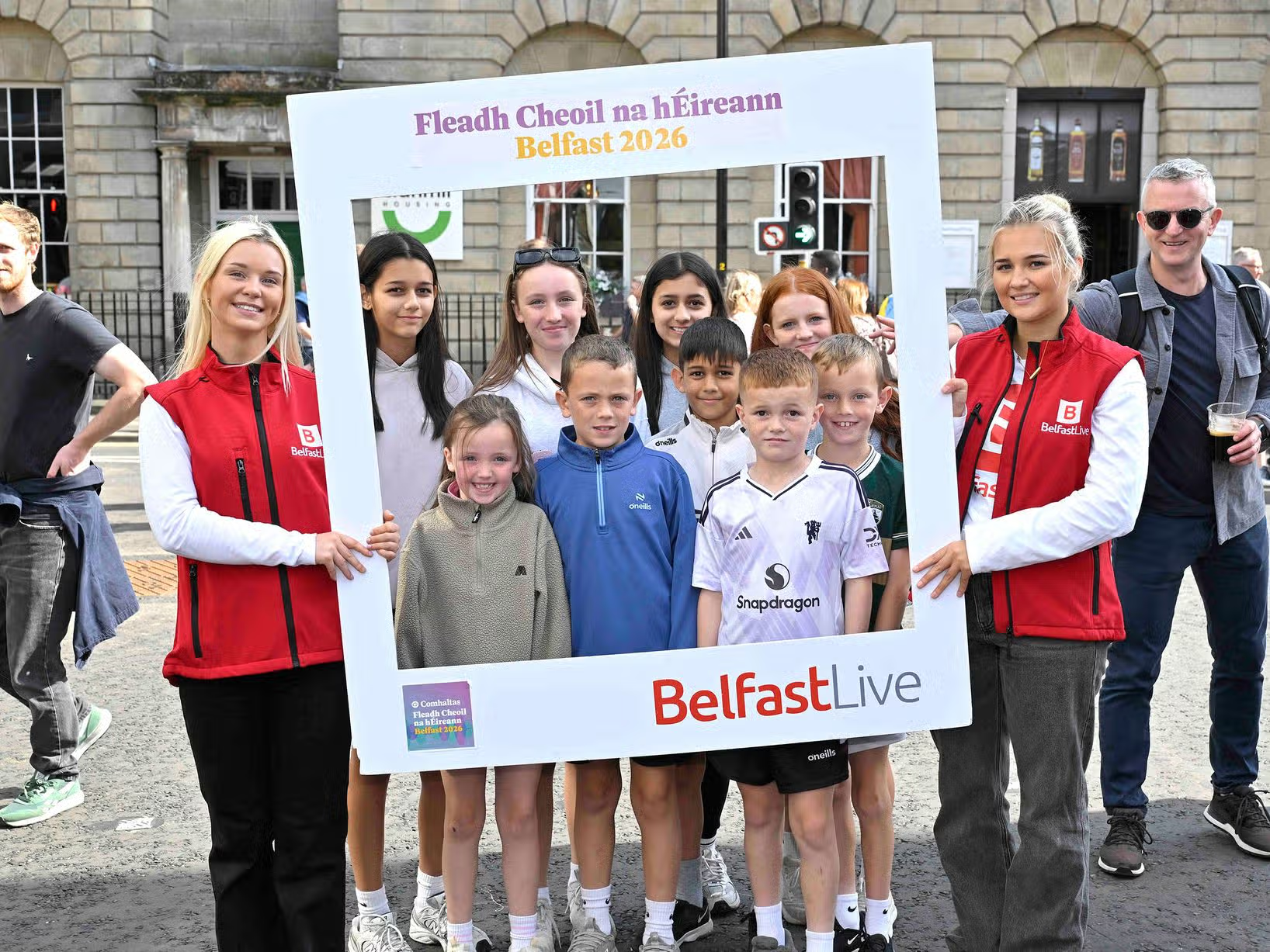


Prods and Tims at peace together at the Belfast Irish Music Festival.
by Alf McCreary in The Belfast Telegraph
When I was growing up in the border area of south Armagh as a “Presbyterian/unionist” by accident of birth, I had no idea that, many years later, I would be enthusiastically welcoming the Fleadh Cheoil na hÉireann to Belfast for the first time.
Nor did I think back then that I would gradually come to appreciate the unflinching courage and immense skill of Gaelic football — particularly that pulsating final in Croke Park last month when the underdogs Mayo deservedly beat the reigning champions Kerry to take home the Sam Maguire after 75 years.
This was not just a remarkable sporting triumph, but also a great example of sportsmanship in the dignified way the Kerry players and supporters remained to applaud their victors. Many other sports, including football, could learn much from this.
In my youth in Bessbrook, Gaelic culture and sport were not part of our so-called “Protestant” culture, but belonged to what many people referred to as “the other side”. Yet this strict division between Orange and Green, so often referred to by outside observers, is not totally accurate, as my grandfather Thomas McCreary symbolised in his long life.
In his early 20s, he joined the Royal Irish Fusiliers and became a stretcher-bearer at the Somme during the First World War. It was only later that I realised how dangerous it had been for him to carry the wounded and the dead back from no man’s land.
Afterwards, this wee Orangeman and local dedicated republicans went to a local pub for more than a few drinks.
My grandfather once told me that he had become an Orangeman because it was the only social club that young Protestant men from his area could join in the rural Ulster of a then-united Ireland. He also told me about the all-night gatherings in the local Orange hall, where he played Irish traditional music on the fiddle until dawn.
He retained his love for this culture all his life.I am sure that he would have loved this week’s Fleadh. In later life, he was a civil servant who went to Crossmaglen each week to help “sign on” local republicans and help them collect their dole money.


Ian Paisley with Alex Salmond and Danny Kennedy at the launch of a new Stena ferry service between Scotland and Northern Ireland. Picture by Bill Heaney
Afterwards, this wee Orangeman and dedicated local republicans went to a pub for more than a few drinks — all of which contradicted the stereotype of endless sectarian friction, at least until the Reverend Ian Paisley urged everyone to “stand up and be counted”.
Tragically, look how that ended up. So, for me, reared as a traditional “Protestant/Unionist” (though no longer so in that sense), the Fleadh in Belfast has many layers.
At one level, it is impressively well-organised, and to be in the middle of the city at this time and celebrating with so many people of different backgrounds is a welcome contrast to other dark days of August when I reported for this newspaper on some of the worst days of the Troubles.
This week, Belfast has been cosmopolitan, welcoming and fun. Everything has been joyful, and it will do wonders across Ireland and elsewhere for the image of this tough and yet so charming and warm-hearted city which has survived the worst of times, and has enjoyed the better times, too.
The air has been alive with music — there have been fiddlers, flautists and other traditional Irish musicians in almost every nook and cranny of this city, watched by others enjoying a pint or two.
I was fortunate enough to attend one of the events at St George’s Church of Ireland in High Street, where their lady choristers gave an excellent performance of traditional music under director David Falconer. One of the highlights was a spirited rendition of Star of the County Down.
There was also a strong symbolic dimension in this performance at St George’s, where Edward Bunting, the famous Irish harpist and folk music collector, served as its organist from 1817 to 1820. So often these local connections with the rest of the island remain unknown to so many people.
It reminds me of the comment by actor and dramatist Micheál Mac Liammóir, who once said that Belfast was “an Irish city but only with different-coloured Post Office boxes”.
For me, the spectacle of Belfast luxuriating in a worldwide tribute to Irish music and culture has been a revelation and a reminder that it is important to try to move from our inherited culture, and to look at the wider world and our neighbours in different ways.
Happily, the Fleadh is being enjoyed for its own sake as a remarkable festival of music and fraternity in a city of character and, at its best, of great friendliness.
All of us who live in this city, and well beyond it, hope that the many thousands who have been visiting here from other parts of Ireland and other parts of the world this week will bring back with them the warm memories of the Fleadh, and memories of the best of our city and our people.
Céad míle fáilte to one and all.
S