


50 local news providers awarded grants of up to £125,000 to support long-term sustainability and growth this Journalism Matters Week

- The ‘Inspiring the Future’ campaign, which encourages children to consider careers in journalism, has reached more than 11,000 students and engaged with more than 100 schools
- This all forms part of the Government’s Local Media Action Plan, backing the vital role of local media in communities across the country
Fifty organisations are set to benefit from the government’s £6 million Local News Fund, helping to ensure people can continue to benefit from trusted, high-quality local journalism.
The locally owned, edited and funded Dumbarton Democrat continues to grow its readership exponentially without funding, financial support or assistance from national or local government and is completely FREE to access for our thousands of readers.
With audiences moving online and consuming their news through an increasingly diverse range of sources, the role of local journalism has never been more important, especially as the Government seeks to devolve power to a local level , given its integral role in holding power to account and tackling mis- and disinformation online.
Central to the Government’s ‘Amplify: The Local Media Action Plan’, the Local News Fund aims to strengthen communities and social cohesion, rebuild social trust, and support local growth by supporting local journalism.
The majority of funding has been awarded to local print and online news outlets and independent local TV and radio stations, who received grants of up to £125,000. The money will be used to invest in community outreach projects, digital tools, apps and new multimedia services that can help these organisations reach new and younger audiences while developing more sustainable sources of income.
These grants have been evenly distributed across England and Wales, but not Scotland, providing funding support for local journalism in every region.
The remainder of the Fund has been awarded to seven organisations, including software developers and major industry players, to develop infrastructure that can benefit the sector as a whole, with grants of up to £275,000 awarded.
Media Minister Ian Murray said:
For decades our local media has remained among the most trusted sources of news. But as the media landscape has become more complex, many outlets have been forced to reduce their numbers or even close. I am determined not to leave local journalism to collapse. This government knows it is critical to communities and fosters a self-confident nation that everyone feels part of.
Through the Local News Fund we are taking action to help newsrooms innovate and adapt their business models for the online world, while incentivising and encouraging the production of high-quality, trustworthy news that Britain’s towns and villages deserve and rely on.
Another key measure in the Local Media Action Plan is the ‘Inspiring the Future’ careers campaign, joint-funded by the News Media Association (NMA), which connects local media employers and journalists with schools to inspire the next generation of reporters. This initial six-month campaign focused on the North West, targeting schools in more deprived areas, with 79% having above national average free school meal eligibility, and the Government will seek to roll it out nationally subject to evaluation and funding.
Theo Bamber, Chief Executive, News Media Association, said:
Alongside DCMS and Education and Employers, we are very pleased to have supported the ‘Inspiring the Future’ pilot connecting local media professionals with the next generation of talent.
As power is devolved out of Westminster, the role of local news media holding power to account will become even more important. This initiative will support that by helping young people understand our industry, the benefits of a career in local media, and the vital role it plays in local communities across the country.
This Journalism Matters Week, an annual campaign run by the NMA that showcases the industry as a key part of the UK’s national infrastructure, the National Committee for the Safety of Journalists will meet to agree on a refreshed National Action Plan, reaffirming this Government’s commitment to journalist safety and tackling obstacles to news gathering which is another pillar of the Local Media Action Plan.
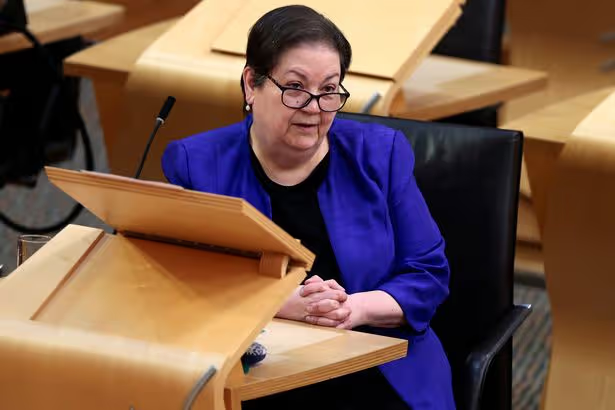


Dame Jackie Baillie MSP, Amanda Graham and Democrat editor Bill Heaney.
An example of the tackling obstacles campaign is in West Dunbartonshire where the local council has banned The Dumbarton Democrat from speaking to their press officers.
Despite the fact that this ban has lasted for more than five years, Amanda Graham, the Council’s chief communications officer has refused to lift it despite pleas even from Dame Jackie Baillie, the MSP for Dumbarton and deputy leader of the Labour Party in Scotland.
Democrat editor Bill Heaney said: “The ban was imposed on the back of a claim that I had interrupted a meeting of the Council. The facts are that I didn’t and that at the end of a meeting I took the opportunity to ask that the sound should be turned up in the chamber in order that the press and public could hear the business being discussed.”
Bringing together representatives from government, journalism, policing, prosecution services and civil society, the aim of the National Action Plan is to set out how the safety of journalists can be protected in the UK.