

Local government reform will create hundreds, if not thousands, of redundant employees who will be without work but will still be paid, forecasts Reform Party’s Scottish leader
by BILL HEANEY
Nursery costs are so high that a nurse told a political debate on TV that even though she was earning a good wage, she was struggling to afford meat for dinner because her daughter’s nursery costs were so high, according to Malcolm Offord, leader of the Reform Party in Scotland.
He told MSPs: “The advice from her trade union was to get herself downgraded to a lower wage to qualify for welfare. The union told her to get herself down to band 5 so that it would be able to put her on a food bank referral.
“Does the First Minister agree that that advice from a trade union might well be in her best interests financially, but that it is a damning criticism of the Scottish tax and benefit system, which perversely incentivises workers to earn less, not more?”
 First Minister John Swinney replied: “Mr Offord’s question rests on a completely fatuous basis. A band 6 nurse at the bottom of that pay scale in Scotland will earn £43,231 and take home £2,258 more after tax than a nurse on the same band in England.
“The issue that the nurse is wrestling with is the fact that the energy wealth of Scotland is not being used for the benefit of the people of Scotland but is being siphoned off by others. That has been the case for the past 50 years”
Me Offord asked the First Minister aware of the ghost army that is made up of 800 employees in the public sector in Scotland who have been declared redundant but are still being paid?
“Is he aware that 49 of those workers without work who have been declared redundant have continued to be paid for more than five years, and that one NHS Highland employee who has been made redundant has continued to be paid for 17 years—yes, 17 years?”
Mr Offord asked: “According to The Sunday Times, those ghost jobs cost at least £25 million a year in salary alone. With that level of unjustifiable spending, is it any wonder that the First Minister faces a £5 billion black hole in his budget?”
“There are so many myths surrounding the material that Mr Offord raised. When people are redeployed to other roles in the public service, they have to work while they are undertaking those other roles. That is the nub of the answer to Mr Offord’s question.”
“Surely that demonstrates that the First Minister’s plan for public service reform is a shambles that will deliver neither rewarding and efficient jobs in the public sector nor value for money for the taxpayer.”
He added: “The public service reform agenda is also about motivating and mobilising community engagement through the creation of community authorities in our communities, so that people have more control over what goes on in the communities that they live in, which I think is a very welcome sentiment.”
“Returning to my first question, which was about the need for work to always pay more, surely the First Minister now accepts that higher taxes in Scotland provide a disincentive to earn more. Why is it fair that firefighters in Scotland pay an extra £425 a year in tax? How does that incentivise them to work extra shifts? Will the First Minister now pledge to Parliament that he will not raise income tax in Scotland any further in next month’s budget?”
But the First Minister told him the Deputy First Minister will set out the Government’s tax proposals on budget day. I come back to the point that I set out in my first answer, which applies to a number of sectors.
“I gave the example of a nurse. I could also give the example of a qualified teacher. A qualified teacher at the bottom of the pay band in Scotland, who earns £43,383, will take home £6,607 more after tax than their equivalent in England.
“We have tax and pay systems in Scotland that are designed to ensure that people have more control over their resources, and they get a wider offering of cost of living measures in Scotland compared with those in any other part of the United Kingdom.
“This Government is providing a set of measures whereby we have free early learning and childcare, free prescription charges, free personal care and free university tuition. We are trying to support people with the cost of living, and we are supporting them with higher public sector pay and, as a consequence, more pay after tax than in the rest of the United Kingdom.”
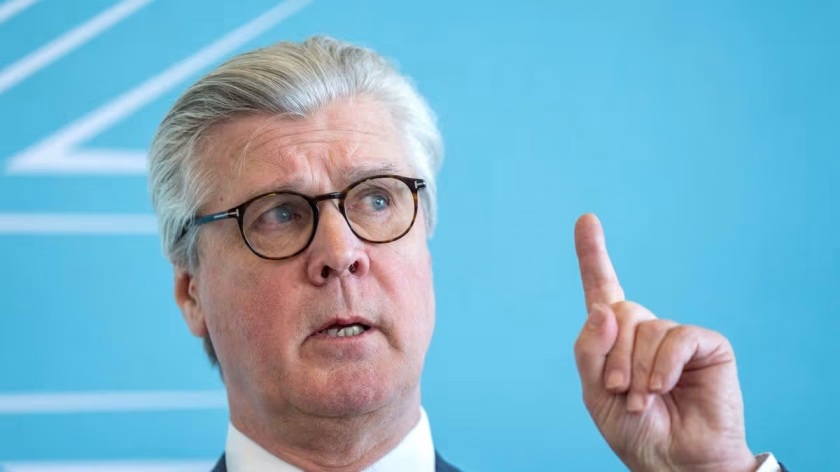
Top of page: Malcolm Offord, Loch Lomondside resident who leads the Reform Party in Scotland.