


Being sold a pup does not mean now what used to, which was that you had been short changed for something you had bought — from a horse to a house. However, there is very real concern in the Scottish Parliament about the growth in the supply of puppies and dogs for purchase online on sites such as Gumtree and from puppy factory farms. Dog lover Christine Grahame MSP has been investigating what could be done to reduce that. She has decided that, if supply is the issue, the current legislation and policing are not having sufficient impact and that she should perhaps tackle demand, which she hopes will have an effect on supply.
 Christine Grahame, who represents Midlothian South, Tweeddale and Lauderdale, has decided to something about her concerns for Man’s Best Friend [And women’s, of course] before she retires from Holyrood where she has been an SNP MSP for 27 years.
Below is an extract from what she told her fellow parliamentarians as she moved her Welfare of Dogs Bill in the chamber on Thursday:
At first, I was a wee bit discombobulated that a debate that should have focused on the acquisition of a puppy or a dog turned into a debate on shock collars. I request here and now that there be draft regulations proposing a ban, as was recommended by the Scottish Animal Welfare Commission almost two years ago. I request that those regulations be laid before a committee and be considered during the current parliamentary session.
I suggest that members across the parties who agree with me that there should simply be a proper, thorough debate on actual regulations—whether or not they agree with a ban—get together and formally request that. I hope that that assuages the concerns of Ross Greer [Green Party] and anybody else who thinks that I am letting the matter go.
Seven years ago, I saw the growth in the supply of puppies and dogs for purchase online on Gumtree and from puppy factory farms, and I thought about what could be done to reduce that. I decided that, if supply was the issue, the current legislation and policing were not having sufficient impact and that I should perhaps tackle demand, which I hoped would have an effect on supply.
We all know that there has been a surge in the level of dog ownership across Scotland and that it was exacerbated by Covid. Combined with the lack of an informed approach among the public to buying a dog—which I understand—that has also led to a rise in unscrupulous breeding and to casual and impulsive though well-meaning purchases. It is therefore more urgent to ensure that those who are thinking of getting a puppy or dog do so in an informed way.
My bill will require the Scottish Government to produce a code of practice that is to be used before someone acquires a puppy or dog—I stress “before”—and to educate prospective dog owners to make them pause—I do not mean to pun there—and reflect before taking on a puppy or dog. I would hope that that would reduce online acquisition. After all, we are talking about a sentient individual, not a fancy watch or a handbag.
The animal welfare issues, emotional distress, massive vet fees and high mortality rates that come about as a result of illegal puppy farming and the buying of dogs that people cannot care for have been well established. The Scottish Society for the Prevention of Cruelty to Animals has estimated that the illegal puppy trade is worth £13 million a year in Scotland. The Dogs Trust has highlighted the huge rise in problems that have arisen from people buying dogs that they cannot properly look after. Abandonment rates are rising.
This week, the Edinburgh Dog and Cat Home had too many dogs. One of them, Susan, a black lab-staffie cross, was abandoned on the streets at four years of age. She is boisterous but loving and friendly and she needs a home. I hope that this helps her and the others to find one. If anyone is thinking about getting a puppy or dog, why not try a rescue centre first?
Calls to the SSPCA helpline about giving up pets have quadrupled. Costs, vet care and inappropriate living conditions are cited as common reasons. A recent survey found that only 29 per cent of people considered cost when they got their pet.
Awareness of the signs of unscrupulous breeding is low. A report by the People’s Dispensary for Sick Animals found that only 43 per cent of dog owners know that a puppy should be seen with its mother. The SSPCA highlighted that 65 per cent of owners found their pets online, and there is £2.5 million of associated fraud. That is serious crime and big business in the criminal fraternity.
According to Government-commissioned research, 20 per cent of puppies bought online fall ill or die within a year. The Dogs Trust’s submission to my bill talks about “educating and providing prospective dog owners with the tools to purchase or rehome a dog more responsibly, and to identify and avoid unscrupulous breeding practices.”
I agree with that. That is the crux of what the bill seeks to achieve—to change the behaviours of the public and to prevent many of the problems that I have highlighted. It is not punitive; it is meant to be educational and to change behaviours.
The code should also be short and easily understood. It will ensure that anyone who is buying a dog will reflect on questions such as “Do you have the right home environment?” and “Is it the right type of dog for you?” as part of the certification. Following that, the person who is handing over the puppy or dog and the person who is receiving it will be required to acknowledge that they have considered the issues raised in the code, with a certificate being issued that is to be kept throughout the dog’s lifetime.
That certificate is based on a process that is followed in France, where, since 2022, a certificate has been required when someone buys a dog or any of a number of other animals. Both my certificate and the French certificate require the provider to sign the certificate, which gives the supplier the responsibility of ensuring that the acquirer has gone through all the necessary steps in the checklist of questions that are contained in the certificate.
I applaud Mike Flynn, the newly and recently retired senior inspector of the SSPCA, because the idea for the certificate was his. I call it the terms and conditions.
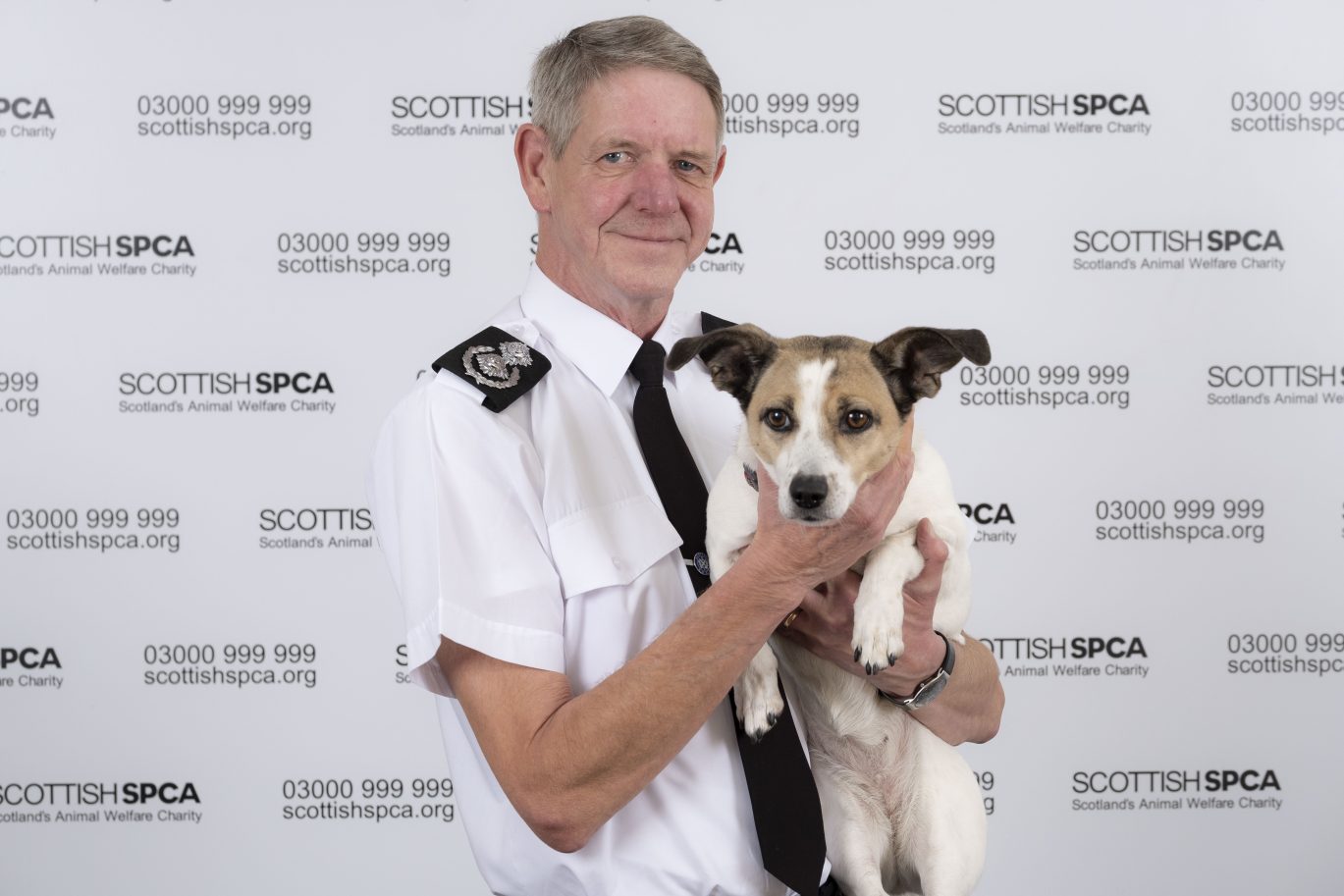
Chief Superintendent Mike Flynn retires
After 37 years of dedicated service to animal welfare, Chief Superintendent Mike Flynn embarks on his next challenge – retirement
Mike Flynn was a well kent face for many years at the SPCA Milton Animal Home in Dumbarton. Before he joined The Scottish SPCA, Mike worked with animals and was an elephant keeper at Edinburgh Zoo.
Mike started with The Scottish SPCA in May 1987. In his role he initiated and started the special investigations unit, which investigates organised dog fighting, badger baiting and the unscrupulous trade in pets to name a few. He also assisted in implementing animal welfare legislation in Jersey, North and Southern Ireland, Canada and Catalonia.
He even wrote the first Inspectors instruction manual that was approved by Crown Office.
Mike has been responsible for all uniformed staff within the Society, all Parliamentary issues relating to animal welfare, and dealt with all animal welfare related Government consultations, including giving evidence to both Scottish and Westminster Committees.
Mike says it is the right time for him to step aside. In March this year, after decades of campaigning, hard work and advocating for change, the outright ban on all forms of snares in Scotland was introduced as the Wildlife Management and Muirburn (Scotland) Bill was passed in the Scottish Parliament. A legacy he should be proud of.
The Bill also gives us enhanced powers to support Police Scotland in tackling crime by allowing SSPCA inspectors to search, seize and examine evidence in cases where they’re already on location helping a live animal.
A truly momentous change that will improve the lives of countless animals, and one Mike, has been driving forward for over 30 years.
It’s not just the charity who recognises the achievements of Mike. In 2006 he was awarded an MBE in the Queen’s 80th birthday honours lists for services to animal welfare in Scotland.
He is also an Honorary Associate of both the Royal College of Veterinary Surgeons and the British Veterinary Association.
Mike is well-respected throughout the Scottish SPCA and has many stories to share.
One of his strangest cases was that of Jimmy the crocodile who was found in the boot of a car! Of course, Mike had to make the sacrifice of booking a flight to Madrid with a colleague and then drove to Torremolinos in Spain to see Jimmy safely placed in a park there.
Despite retiring, Mike will continue being an independent external animal welfare advisor on the welfare and ethics committee of Scotland’s largest scientific animal research company and also a member of the Scottish Government’s Scottish Animal Welfare Commission.